
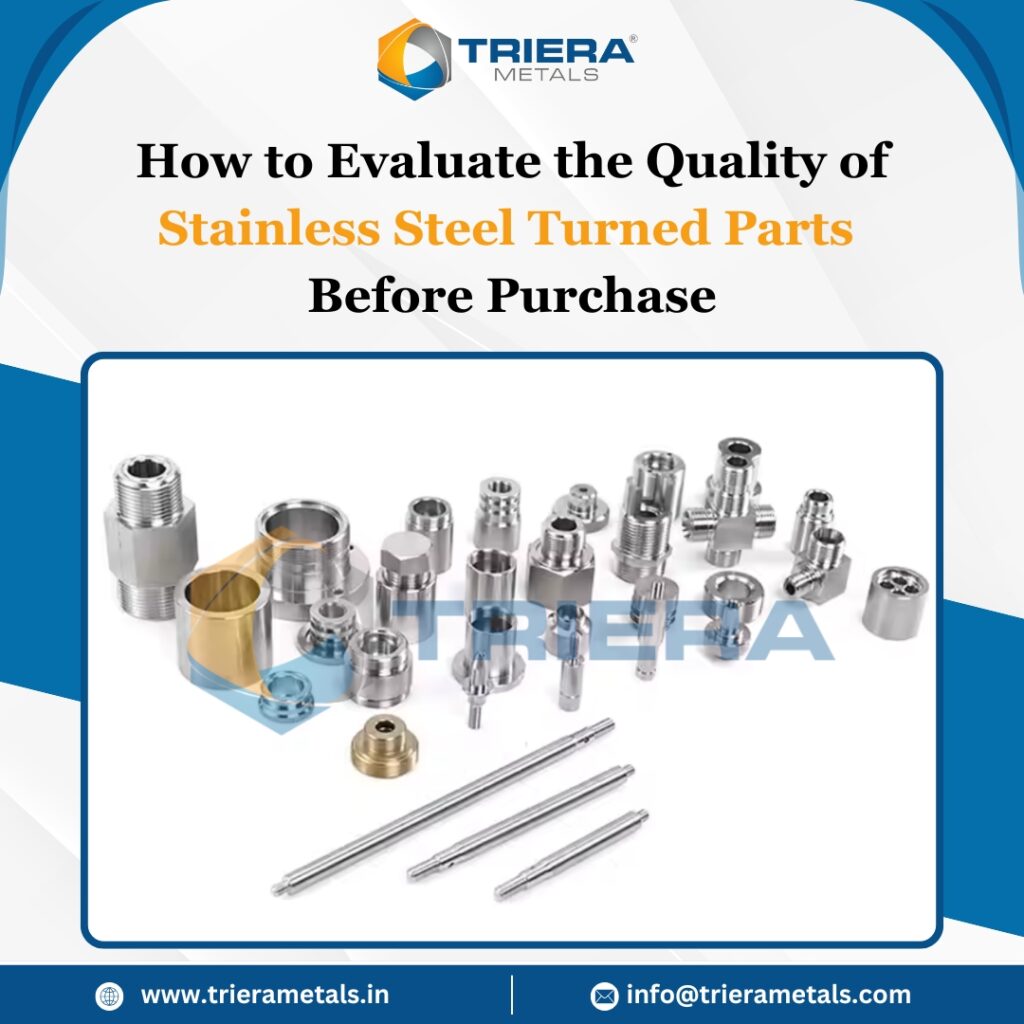
How to Evaluate the Quality of Stainless Steel Turned Parts Before Purchase
When it comes to manufacturing precision components, stainless steel turned parts are a backbone for industries like automotive, aerospace, medical devices, and electronics. But here’s the catch—buying them without evaluating quality can cost you more in the long run. Let’s dive into how you can ensure that the stainless steel turned parts you purchase meet the highest standards.
Understanding Stainless Steel Turned Parts
Turned parts are components manufactured by machining stainless steel rods or bars on a lathe. These parts are used in everything from fasteners and connectors to precision medical instruments. Since their applications are so diverse, their quality directly impacts product performance.
Why should you invest time in evaluating stainless steel turned parts? Three reasons stand out:
- Cost Efficiency – Defective parts can lead to waste and rework.
- Safety & Reliability – In industries like aerospace or healthcare, failure isn’t an option.
- Longevity & Performance – High-quality parts last longer and perform consistently.
Material Composition and Grade
Not all stainless steels are created equal. Grades like 304, 316, and 410 are commonly used, each offering unique properties. Always request a Material Test Certificate (MTC) to confirm authenticity and ensure the supplier isn’t cutting corners with cheaper alloys.
Dimensional Accuracy
Precision is everything in turned parts. Even the slightest deviation in diameter or length can cause assembly issues. Use tools like micrometers and calipers to verify tolerances as per your design requirements.
Surface Finish and Appearance
The surface tells you a lot about the machining process. Look for:
- Smooth finish without burrs
- No scratches or dents
- Consistency in polish
Poor surface quality can lead to friction, wear, or even corrosion.
Mechanical Properties Testing
To ensure durability, parts should undergo tests such as:
- Hardness test – Confirms material toughness
- Tensile strength test – Ensures the part can withstand load without failure
These checks give confidence that the parts can survive demanding applications.
Corrosion Resistance
One of stainless steel’s biggest advantages is its corrosion resistance. Salt spray tests and pitting resistance tests help evaluate this property. For outdoor or marine applications, this step is non-negotiable.
Heat Treatment and Processing
Some turned parts require heat treatment to enhance hardness and strength. Improper heat treatment can result in brittleness or reduced lifespan. Verify processing details with your supplier.
Consistency in Batch Production
When ordering in bulk, one defective piece can jeopardize an entire assembly. Conduct random sample checks across batches to ensure consistency in dimensions, finish, and strength.
Supplier Certifications and Standards
Reliable suppliers comply with international standards like ISO 9001, ASTM, or DIN. Certifications indicate that proper quality assurance systems are in place. Don’t hesitate to request documentation.
Performance Testing in Simulated Conditions
Real-world testing is the ultimate proof of quality. Subject parts to stress loads, vibration, or high-temperature environments to see how they hold up under actual operating conditions.
Packaging and Handling Quality
Even the best-turned parts can be ruined by poor packaging. Ensure that components are securely packed to avoid scratches, dents, or contamination during shipping.
Conclusion
Evaluating stainless steel turned parts before purchase isn’t just a precaution—it’s an investment in quality, reliability, and peace of mind. From verifying grades to testing mechanical properties and ensuring supplier certifications, every step ensures you get value for your money. The next time you’re sourcing turned parts, use these checkpoints as your guide to make smarter purchasing decisions.